Ultrasonic cleaning has a genuinely split reputation in electronics repair. Circuit board manufacturers rely on it every day to remove flux residue after soldering. Some repair technicians refuse to use it at all, citing real cases of component damage. Both positions are correct, because the outcome depends almost entirely on whether it's done to the right specification, on the right kind of board, by someone who understands the difference.
What Ultrasonic Cleaning Actually Is
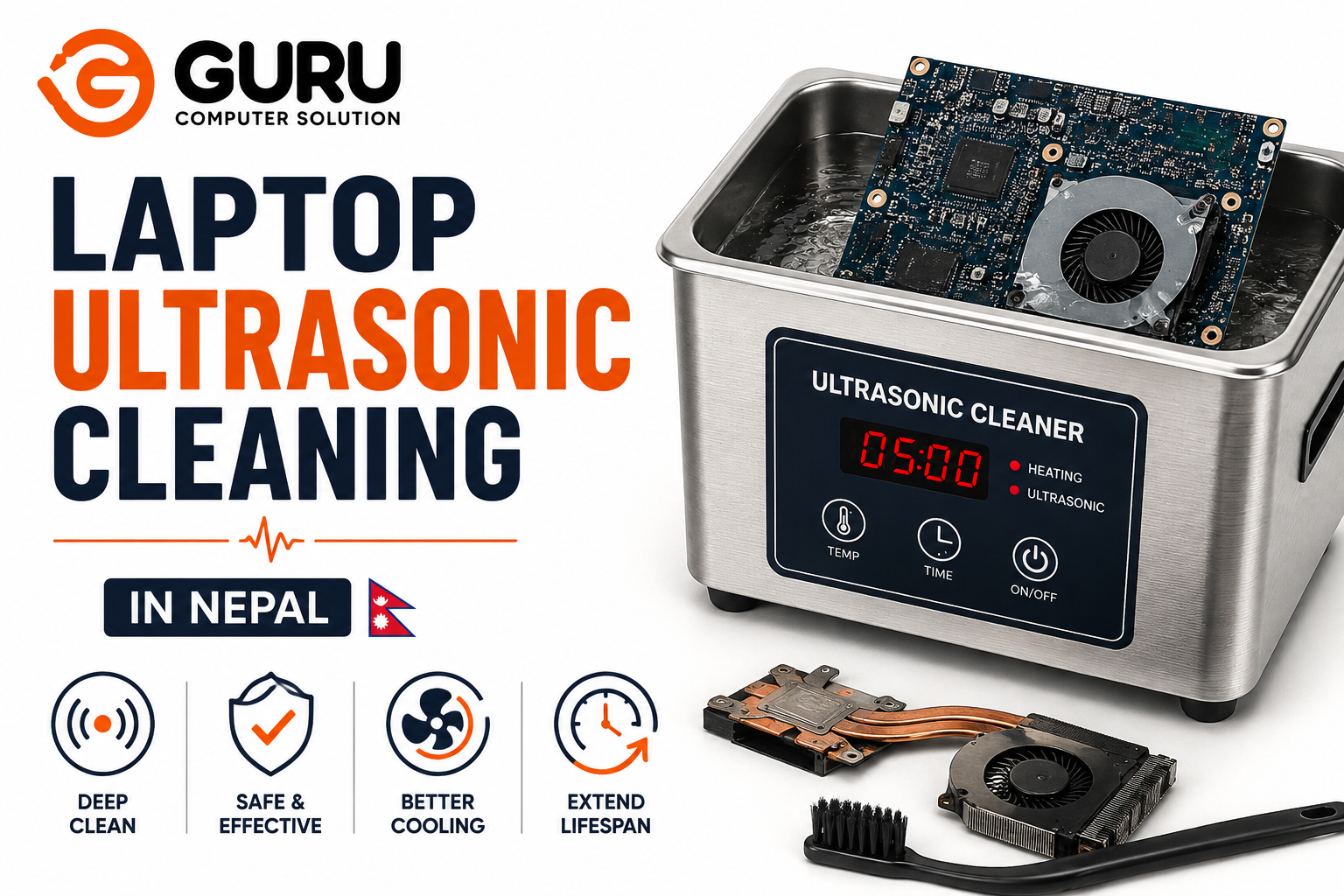
Ultrasonic cleaning uses high frequency sound waves passed through a liquid solution to create millions of microscopic bubbles, a process called cavitation. As these bubbles form and rapidly collapse against a surface, they dislodge dirt, oxidation, and residue from areas that brushes and compressed air genuinely can't reach, including narrow gaps and the undersides of low profile components.
This is precisely why it's standard practice in circuit board manufacturing, used specifically to remove flux residue after soldering, and why it remains one of the most effective methods for reaching contamination in tight, complex assemblies.
Why It's Genuinely Effective for Motherboards
A laptop motherboard that's dealt with a liquid spill, years of accumulated dust mixed with moisture, or corrosion around connectors has contamination in places that simple wiping or compressed air cannot physically reach, underneath low standoff components, within fine pitch connector pins, in gaps between tightly packed parts. Cavitation reaches these areas because it works through the liquid itself, not through direct physical contact, cleaning every immersed surface of the board simultaneously and uniformly.
For corrosion specifically, and especially following liquid damage, this makes ultrasonic cleaning meaningfully more thorough than manual cleaning alone, which is why it's become a recognized part of professional liquid damage recovery rather than a novelty service.
Why It Also Carries Real Risk
The same cavitation force that makes ultrasonic cleaning effective is exactly what makes it risky when the parameters or the board itself aren't right for the process.
Component displacement or damage. The vibration can loosen or crack delicate surface mount components, particularly quartz crystals and certain sensor packages, if the frequency or intensity is too aggressive for the specific components present.
Bond wire breakage inside chips. Integrated circuits contain extremely fine internal wires connecting the chip die to its package. Excessive vibration at the wrong frequency can break these, causing a chip failure that may not be immediately obvious after cleaning.
Batteries and non-waterproof components must never be in the bath. This is one of the most consistently repeated safety rules across the industry, and for good reason. A laptop's battery, along with any component not rated for immersion, must be fully removed before the board goes anywhere near an ultrasonic bath.
Incomplete drying leading to corrosion. If a board isn't thoroughly and properly dried afterward, residual moisture can cause white corrosive residue to form on conductors and create current leakage paths, effectively reintroducing the exact kind of damage the cleaning was meant to prevent.
Wrong frequency for the specific board. Lower frequencies (around 20 to 25 kHz) create larger, more aggressive cavitation bubbles suited to robust, simple items, but can be too harsh for a densely populated modern motherboard. Higher frequencies (35 to 40 kHz) produce gentler cavitation better suited to sensitive electronics, and this range is generally treated as the safer starting point for circuit board work.
Why Some Technicians Avoid It Entirely
A meaningful part of the repair community's skepticism toward ultrasonic cleaning isn't unfounded. It comes specifically from misuse, using a bath meant for robust manufacturing parts on a delicate, fully populated consumer motherboard with sensitive, unsealed components still attached, or using the wrong solution, wrong temperature, or wrong duration. Used this way, the risk of component damage is real. Used with the correct frequency, an appropriate cleaning solution, controlled time, and proper post-clean drying, it's the same process board manufacturers rely on as standard practice worldwide.
The difference between "ultrasonic cleaning is dangerous" and "ultrasonic cleaning is the industry standard" isn't a contradiction. It's entirely a matter of correct process versus incorrect process.
What a Properly Done Process Actually Looks Like
Battery and any non-immersion-rated components removed first, without exception, before the board goes near the bath.
Frequency set appropriately for a densely populated board, generally in the 35 to 40 kHz range rather than more aggressive lower frequencies suited to simpler items.
An appropriate, PCB safe cleaning solution, such as deionized water with a mild detergent, rather than harsh chemicals or unfiltered tap water, which can themselves cause corrosion.
Controlled cleaning duration, typically in the range of several minutes per cycle rather than extended, unsupervised soaking.
Thorough, complete drying afterward, including adequate time and appropriate methods to ensure no residual moisture remains in connectors or under components before the board is reassembled and powered on.
Testing under power only after full drying is confirmed, never immediately after removal from the bath.
When Ultrasonic Cleaning Makes Sense for a Laptop
- Following liquid damage, where contamination and residue have reached areas standard cleaning can't access
- Heavy corrosion around connectors or component leads, particularly after an old or unaddressed spill
- Long neglected internal dust and grime buildup mixed with moisture over years of use
- As part of a comprehensive liquid damage recovery process, alongside inspection and testing, not as a standalone quick fix
When It's Not the Right Tool
- Routine dust cleaning with no liquid damage or corrosion present, where standard cleaning methods are sufficient and lower risk
- Boards with components known to be particularly vibration sensitive, where a technician's judgment may favor manual cleaning of specific areas instead
- Any situation where the battery or other non-removable, non-waterproof components cannot be safely detached first
Why Choose Guru Computer Solution for Ultrasonic Cleaning in Nepal
Correct Process, Not a Shortcut We follow proper frequency, solution, and duration parameters suited to a populated laptop motherboard, not a generic industrial setting repurposed without adjustment.
Full Battery and Component Removal First Every non-immersion-safe component is removed before any board goes into the bath, without exception.
Thorough Drying and Testing Protocol We ensure complete drying and inspection before any board is reassembled or powered on, preventing the exact corrosion risk that improper drying can cause.
Used Where It Actually Helps We recommend ultrasonic cleaning specifically where it provides genuine benefit, liquid damage, heavy corrosion, deep contamination, not as a blanket upsell for routine maintenance.
Conclusion
Ultrasonic cleaning is neither a miracle fix nor something to avoid outright. It's a genuinely effective, industry standard method for reaching contamination that manual cleaning can't, and it's also a process that causes real damage when the frequency, solution, duration, or component removal steps aren't handled correctly. The deciding factor isn't whether ultrasonic cleaning is used, it's whether it's done to the right specification by someone who understands exactly which components need to come off the board first.
If your laptop has liquid damage, heavy corrosion, or deep internal contamination, contact Guru Computer Solution for a proper assessment and professional cleaning service in Nepal.