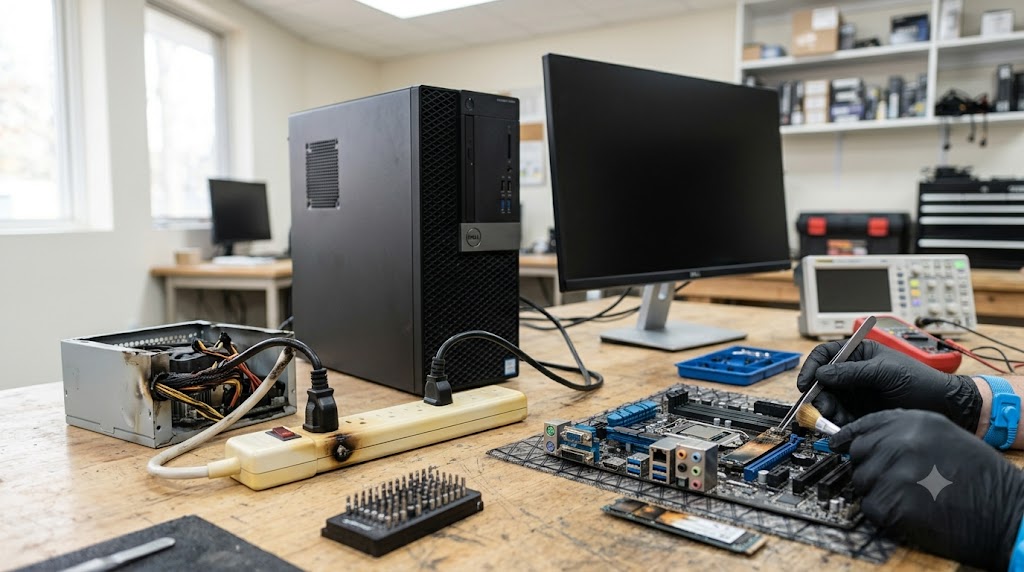
Many people assume that any power strip can protect their computer and electronics from power surges. Unfortunately, that's not always true. Cheap surge protectors often provide little to no real protection despite marketing claims on the packaging. When a voltage spike occurs, these low-quality devices can fail instantly, allowing damaging electrical energy to reach connected equipment. Over the years, we've seen motherboards, power supplies, monitors, and storage devices damaged because a low-cost surge protector couldn't do the job it promised. Understanding the risks can help you make better decisions and avoid expensive repairs.
What Problem Is the Customer Facing?
Customers often experience:
- Desktop PC suddenly won't power on
- Burnt power supply units (PSUs)
- Damaged motherboards
- Dead monitors
- Corrupted storage devices
- Random system instability after power events
- Multiple devices failing simultaneously
In many cases, all affected devices were connected to the same inexpensive surge protector.
Why Does It Happen?
1. Poor Surge Protection Components
Low-quality surge protectors often contain undersized protection components that fail during significant voltage spikes.
2. Misleading Marketing
Some products are marketed as surge protectors when they function primarily as basic power strips.
3. Low Joule Ratings
A surge protector's joule rating indicates how much surge energy it can absorb. Cheap models often provide minimal protection.
4. Component Aging
Surge protection components degrade over time and may stop providing protection without obvious warning signs.
5. No Protection Indicators
Many budget units lack indicators showing whether surge protection is still functioning.
6. Poor Build Quality
Inferior wiring, loose connections, and low-grade materials can create additional electrical risks.
Real Damage We've Seen
Burned Power Supplies
One of the most common failures occurs when a surge passes through the protector and damages the PSU.
Dead Motherboards
Voltage spikes can destroy power regulation circuits, MOSFETs, and motherboard components.
Failed SSDs and Hard Drives
Storage devices may suffer data corruption or complete failure after a power event.
Damaged Monitors
Monitor power boards are particularly vulnerable to electrical surges.
Multiple Device Failures
When a significant surge occurs, several devices connected to the same strip may fail at once.
Symptoms After a Surge Event
Common warning signs include:
- Burning smell near electronics
- Devices refusing to power on
- Random crashes after a storm
- Flickering displays
- PSU clicking noises
- Corrupted files
- Visible scorch marks
- Tripped breakers
Visual Signs During Inspection
Burn Marks
Darkened areas around power connectors or internal components.
Melted Plastic
Heat damage around outlets or plugs.
Discolored PCB Areas
Signs of electrical overstress on internal boards.
Swollen Components
Capacitors may bulge or leak after a surge event.
Damaged Power Cables
Evidence of excessive current flow.
Why Cheap Surge Protectors Can Cost More
Trying to save a small amount on a surge protector can lead to:
- Expensive motherboard repairs
- Power supply replacement
- Data recovery costs
- SSD and HDD replacement
- Business downtime
- Permanent data loss
The repair cost often far exceeds the price difference between a budget surge protector and a quality one.
Diagnostic Process Used by Technicians
A professional diagnosis typically includes:
- Power supply testing
- Motherboard inspection
- Surge damage assessment
- Storage device health checks
- Voltage rail measurements
- Short-circuit testing
- Component-level diagnostics
Possible Solutions
Replace Low-Quality Surge Protectors
Use reputable surge protection devices with proper safety certifications.
Inspect Devices After Power Events
Even if equipment appears functional, hidden damage may exist.
Use UPS Protection
A quality UPS can provide additional protection against surges and power interruptions.
Perform Regular Backups
Protect important data from unexpected hardware failure.
Professional Diagnostics
Have affected equipment inspected before damage worsens.
Why Choose Guru Computer Solution?
1.Certified Technicians
Experienced in diagnosing power-related hardware failures.
2.Advanced Diagnostic Tools
Professional testing for surge-damaged components.
3.Component-Level Repairs
Motherboard and power circuit repair expertise.
4.Data Protection Focus
Helping recover and protect important files.
5.Affordable Solutions
Cost-effective repairs compared to replacing entire systems.
Conclusion
A cheap surge protector may look like an easy way to protect your electronics, but poor-quality units often provide little real defense against damaging voltage spikes. We've seen power surges destroy PSUs, motherboards, storage devices, and monitors that were connected to low-cost protectors that failed when they were needed most. Investing in quality surge protection is far less expensive than repairing or replacing damaged hardware.
If your computer or electronics have been affected by a power surge, Guru Computer Solution can perform professional diagnostics, hardware repair, data recovery, and power-related troubleshooting to help restore your system safely and reliably.