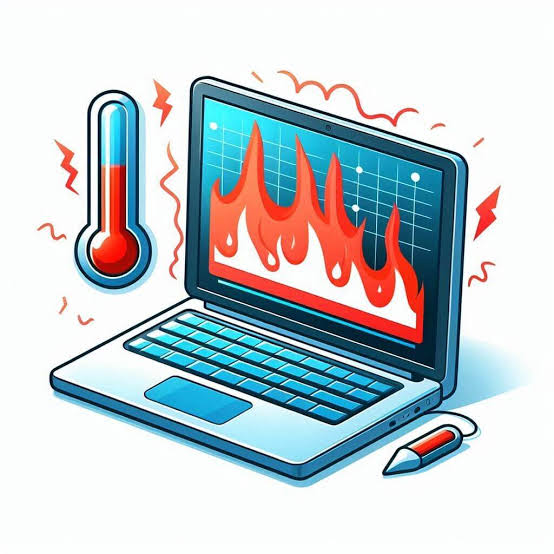
A laptop that runs noticeably hotter while plugged in isn't a coincidence—charging genuinely adds thermal load on top of whatever the CPU and GPU are already generating. Understanding why this happens helps you tell the difference between normal behavior and a warning sign worth addressing.
Why Charging Adds Heat in the First Place
Charging a battery isn't a passive process. Converting incoming power into the correct voltage for the battery, while simultaneously powering the rest of the laptop, generates additional heat from the charging circuitry itself — on top of whatever the CPU and GPU are producing. This is why "hot while charging, cooler while on battery" is a genuinely common and partly expected pattern, not automatically a fault.
The real question isn't whether it gets a little warmer while charging — it's whether the heat is excessive, sustained, or paired with other symptoms.
Common Causes of Charge-Time Overheating
1. Charging and Active Use Combined
Using the laptop under load — video calls, gaming, heavy multitasking — while it's also charging means the CPU/GPU heat and the charging circuit heat are both present at once, compounding total thermal output.
Solution: Where possible, let demanding tasks run with the charger briefly unplugged if the battery has charge to spare, or ensure cooling is optimized during simultaneous use.
2. Dust Buildup Restricting Airflow
Dust accumulating in vents and around the fan blades reduces airflow efficiency, which becomes far more noticeable under the added load of charging.
Solution: Professional internal cleaning of vents, fans, and heatsinks restores proper airflow — this is one of the most common and most effective fixes for charge-time heat complaints.
3. Degraded Thermal Paste
Thermal paste between the CPU/GPU and their heatsinks dries out and loses effectiveness over 2–4 years of normal use, reducing how efficiently heat transfers away from the chip.
Solution: Repasting restores proper heat transfer — often producing a noticeable temperature drop, especially under the combined load of active use and charging.
4. Charging on Soft or Blocked Surfaces
Using a laptop on a bed, couch, or pillow blocks the bottom-mounted intake vents that most laptops rely on for airflow, trapping heat that charging then adds to.
Solution: Use a hard, flat surface or a cooling pad/stand — this alone resolves a significant share of charge-time overheating complaints without any repair needed.
5. Non-Genuine or Underpowered Chargers
A charger that doesn't match the laptop's power delivery specification can cause the charging circuit to run less efficiently, generating more heat than a properly matched charger would.
Solution: Use the manufacturer's original charger or a certified-compatible equivalent with matching voltage and wattage specifications.
6. Aging Battery Generating Its Own Heat
A battery nearing the end of its healthy lifecycle has higher internal resistance, which generates additional heat during charging beyond what a healthy battery would produce.
Solution: A battery health diagnostic can confirm whether the battery itself — not just the charging circuit — is contributing to the heat, and whether replacement is warranted.
7. Power Settings Keeping the CPU at Higher Clocks Than Needed
Some Windows power configurations keep the processor running at higher clock speeds than a given task actually requires, generating unnecessary heat that becomes more noticeable while charging adds its own thermal load.
Solution: Adjusting processor power management settings (maximum processor state, cooling policy) can meaningfully reduce baseline heat output during everyday tasks.
When Charge-Time Heat Is a Warning Sign, Not Just Normal Behavior
Contact a technician if you notice:
- The laptop becomes hot to the touch, not just warm, specifically while charging
- Fans run at maximum speed even during light tasks while plugged in
- The laptop shuts down or throttles heavily only while charging
- Heat is concentrated in one specific area rather than general warmth
- The charging port or cable itself feels hot, separate from the chassis
These patterns point toward a specific hardware cause — VRM stress, a failing fan, a battery issue, or a charging circuit fault — rather than the normal, mild warmth that comes from charging alone.
Thermal Solutions That Actually Work
Professional Cleaning: Removing built-up dust from vents, fans, and heatsinks is often the single most effective fix, since restricted airflow is one of the most common underlying causes.
Repasting: Replacing dried, degraded thermal paste restores efficient heat transfer between the CPU/GPU and their cooling systems.
Fan Inspection and Replacement A fan that's slowing down, making noise, or not reaching full speed under load can't keep up with the combined heat load of active use and charging.
Battery Health Assessment Confirming whether battery degradation is contributing to excess heat, and replacing it if it's approaching end of life.
Charger Verification Ensuring the charger in use actually matches the laptop's rated specifications, rather than assuming any charger that fits is equivalent.
Why Choose Guru Computer Solution?
Accurate Thermal Diagnosis We identify the actual source of excess heat — airflow, thermal paste, battery, or charging circuit — rather than guessing.
Professional Cleaning and Repasting Our technicians use proper thermal compound and full disassembly to restore effective cooling, not just surface-level dusting.
Battery and Charging Circuit Testing We verify whether the battery or charging components are contributing to the heat, with clear results before recommending any repair.
Preventive Maintenance Plans Regular cleaning and thermal checks catch overheating causes before they lead to throttling, shutdowns, or component damage.
Conclusion
Some added warmth while charging is normal—charging circuitry itself generates heat on top of whatever the CPU and GPU are already producing. But excessive heat, sustained high fan speed, or heat concentrated in one area point to a specific, fixable cause: dust buildup, degraded thermal paste, an aging battery, or a mismatched charger. Identifying which one is affecting your laptop is the difference between a simple cleaning and a preventable component failure.
If your laptop runs hot specifically while charging, contact Guru Computer Solution for an accurate thermal diagnosis and the right fix.